

How Industrial CNC Router Machines Are Built: Complete Quality Control Guide
A high-quality CNC router machine depends on precision engineering, rigid machine structure, and strict quality control standards. In this article, we show how industrial CNC router machines are manufactured step by step — from frame welding and machining to assembly, testing, and final inspection.
Watch How We Manufacture High-Quality CNC Router Machines
The following video demonstrates the real production process of our 4x8 ATC CNC router machine, including frame construction, motion system installation, spindle testing, and final performance verification.
Our CNC Router Machine Quality Testing Standards
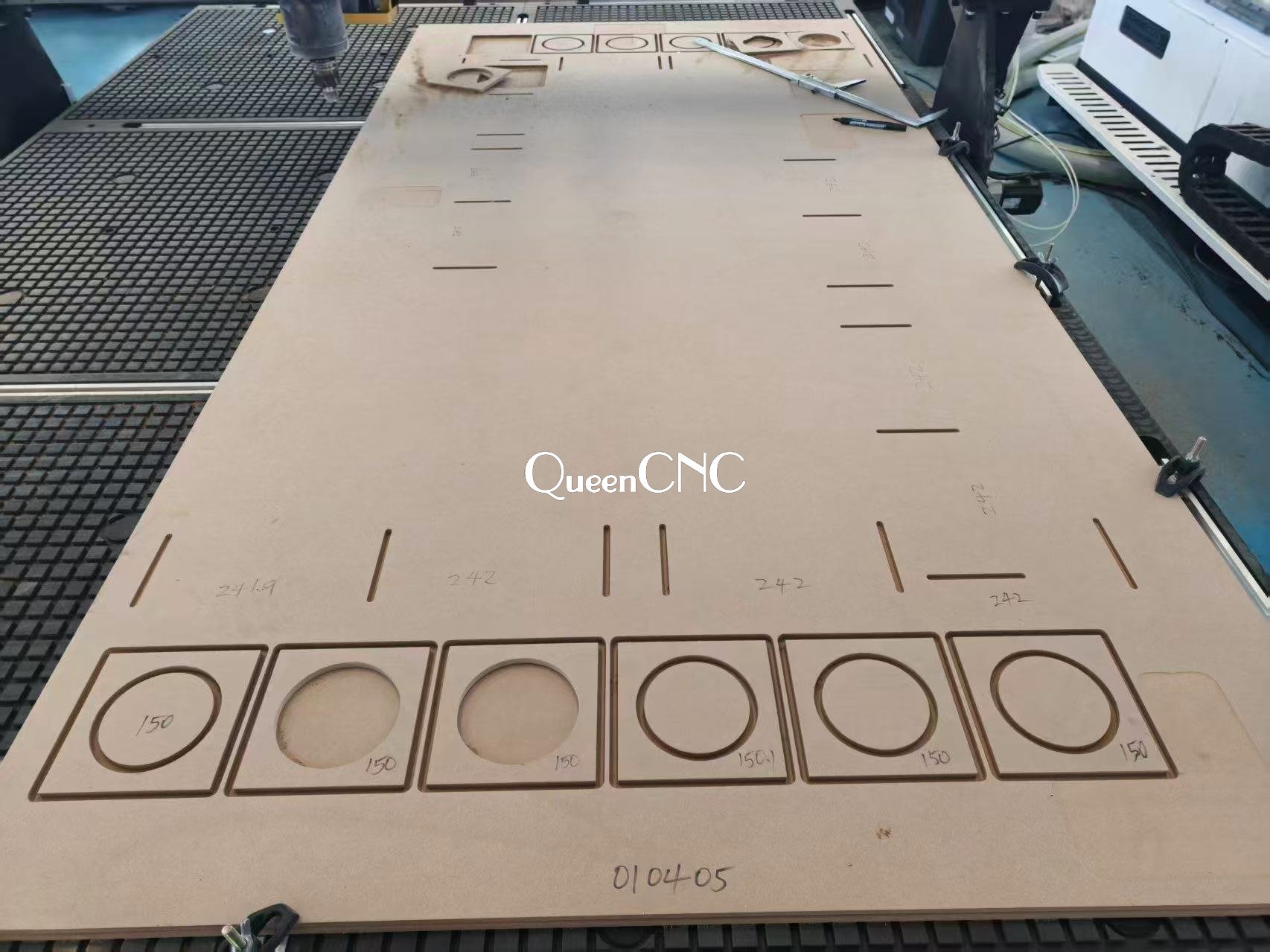
Building a professional CNC router machine requires rigidity, precision transmission systems, and stable electrical integration. Below is the engineering blueprint used in industrial-grade CNC manufacturing.
1. Structural Rigidity: The Heavy-Duty Foundation
Machine accuracy begins with frame stability. Any structural deformation directly affects machining precision and long-term reliability.
- Base Frame: Heavy-duty industrial steel tubing (6–10mm thickness) is used. After welding, the frame undergoes stress-relief aging treatment to prevent deformation.
- Gantry Design: A reinforced moving gantry with dual-drive motors ensures balanced motion and eliminates racking during high-speed operation.
- Precision Machining: Rail mounting surfaces are milled on large CNC boring machines to guarantee perfect flatness for linear guide installation.
2. Motion System: Transmission and Guidance
The motion system converts motor rotation into precise linear movement, directly determining machining accuracy and smoothness.
- Linear Guides: Square profile linear rails such as Hiwin or PMI are used for higher rigidity compared to round shafts.
- Z Axis: High-precision C5 ball screws prevent spindle drop and improve vertical accuracy.
- X/Y Axis: Helical rack and pinion transmission provides smoother motion, higher load capacity, and better durability for large-format machines.
- Planetary Reducers: Industrial reducers increase torque while minimizing backlash.
3. Spindle System: The Heart of the CNC Router
- ATC Spindle: Automatic Tool Changer spindles improve efficiency by allowing automatic switching between roughing and finishing tools.
- Ceramic Bearings: High-speed ceramic bearings ensure stability at 18,000–24,000 RPM.
- Cooling Options: Air-cooled spindles require less maintenance, while water-cooled spindles provide quieter continuous operation.
4. Electrical Control and Drive System
- Servo Motors: Closed-loop or AC servo systems deliver constant torque and prevent lost steps during machining.
- Shielded Cabling: Industrial shielded cables reduce electromagnetic interference from VFD systems.
- Industrial Controllers: Syntec, NK105, or LNC controllers ensure stable multi-axis machining performance.
5. Assembly Standards: The Invisible Quality Factors
- Axis Squareness: Precision calibration ensures X and Y axes remain perpendicular within 0.02mm.
- Wire Management: Heavy-duty drag chains protect cables during long-term operation.
- Machine Leveling: Industrial leveling feet prevent frame distortion after installation.
Recommended 4x8 ATC CNC Router Machine
If you are looking for a reliable CNC router for cabinet making, furniture production, or woodworking factories, our industrial ATC CNC router provides high precision, automatic tool changing, and stable long-term performance.
 +86 15054192269
 sales@queen2012.com
 +86 15054192269
 +86 15054192269

