

ATC CNC Router vs Standard CNC Router: Which Is Better for Your Cabinet Business?
Choosing the right CNC router is an important investment for any woodworking or cabinet manufacturing business. With different machine configurations available, many buyers face a common question: Should you choose a standard CNC router or upgrade to an ATC CNC router?
Both machines can process wood-based materials, including MDF, plywood, and other furniture panels. However, they are designed to support different production requirements.
Understanding their differences can help you select a machine that matches your current workload, production process, and future business plans.
1. What Is a Standard CNC Router?
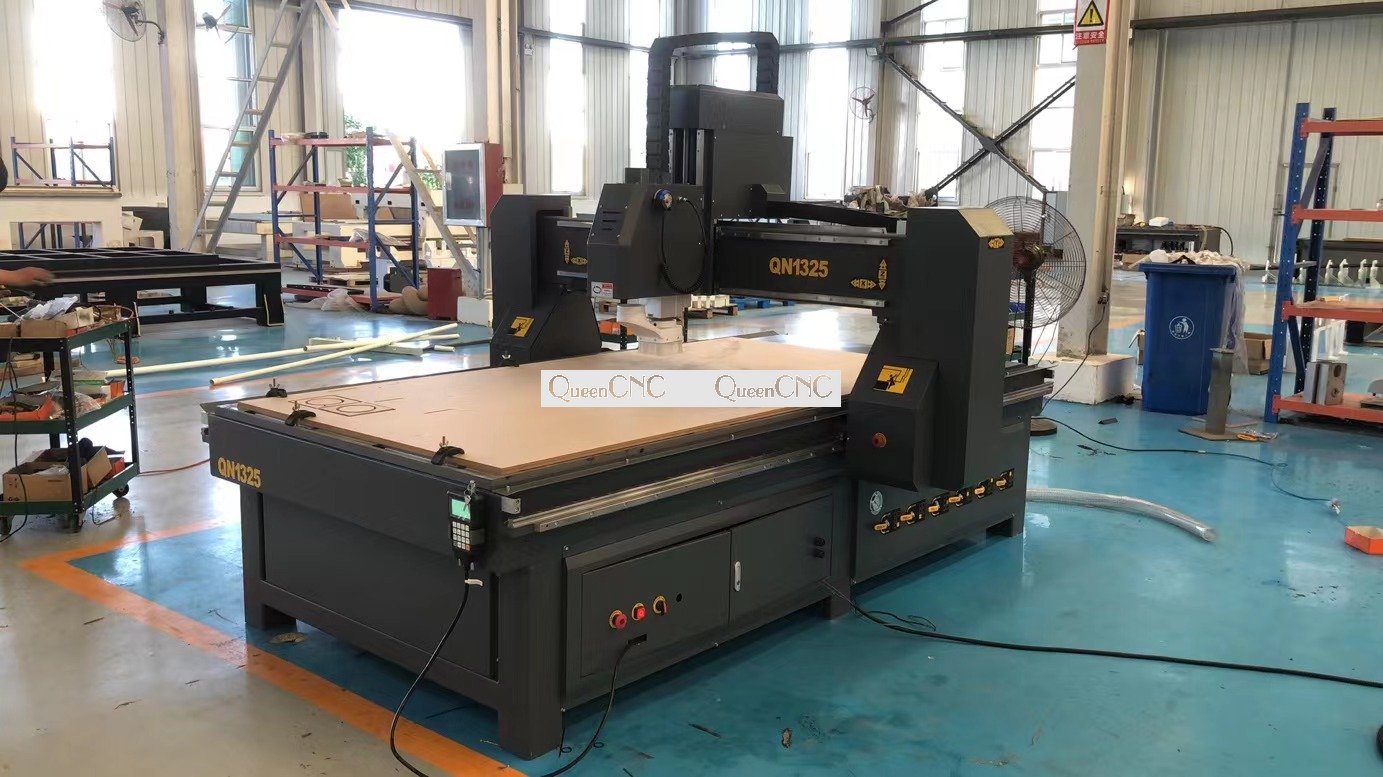
A standard CNC router is a computer-controlled machine used for cutting, engraving, milling, and shaping materials.
It is commonly used in woodworking workshops, furniture factories, advertising production, and custom manufacturing.
Depending on its configuration, a standard CNC router can perform operations such as:
-
Cutting MDF and plywood panels
-
Engraving cabinet doors and decorative panels
-
Milling grooves and profiles
-
Processing solid wood components
-
Producing customized furniture parts
Most standard CNC routers use a single spindle without an automatic tool changer. When a machining job requires a different cutting tool, the operator generally needs to stop the machine and change the tool manually.
For workshops that mainly perform single-tool operations or have relatively simple machining requirements, this configuration can be a practical choice.
2. What Is an ATC CNC Router?
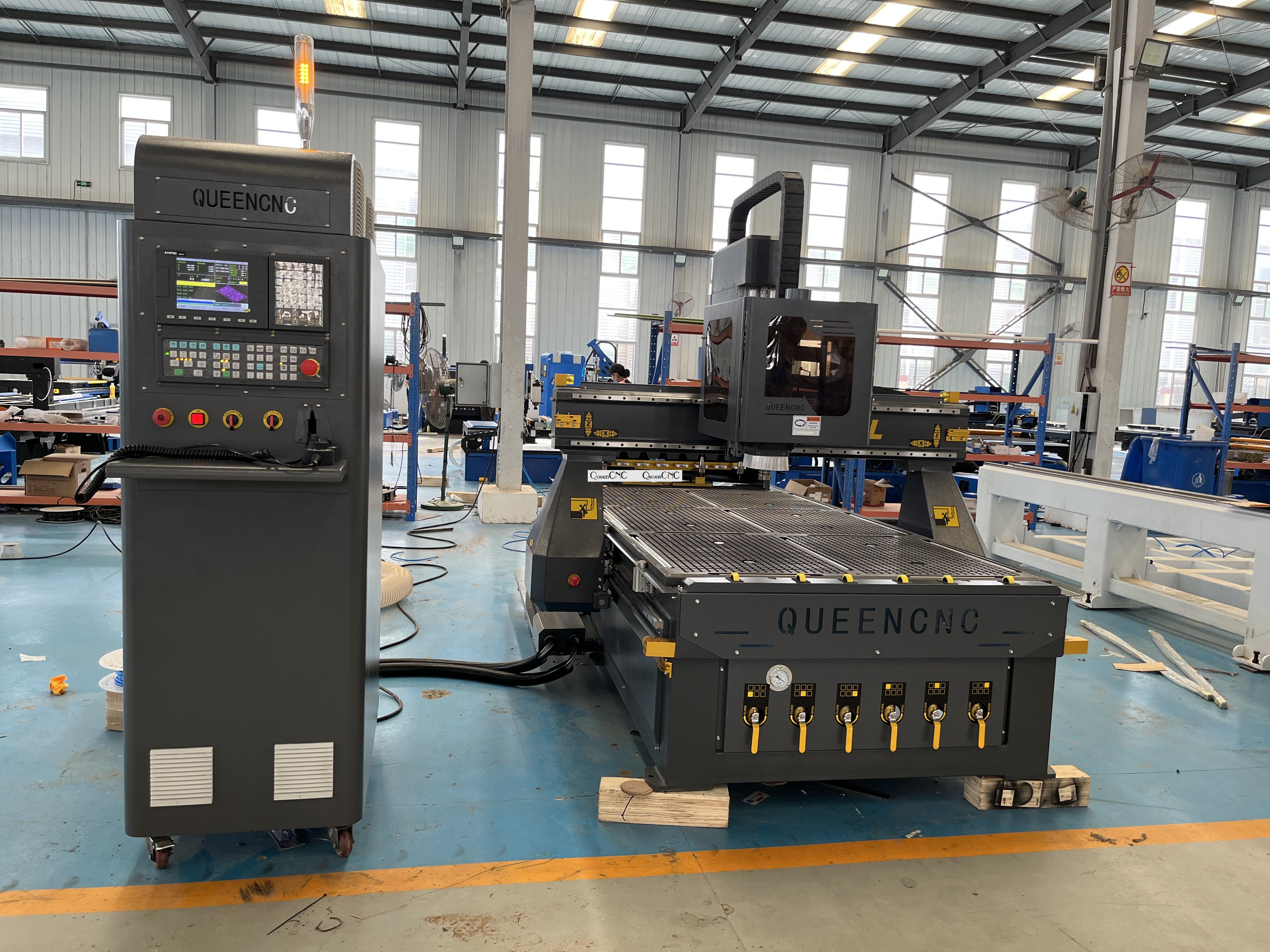
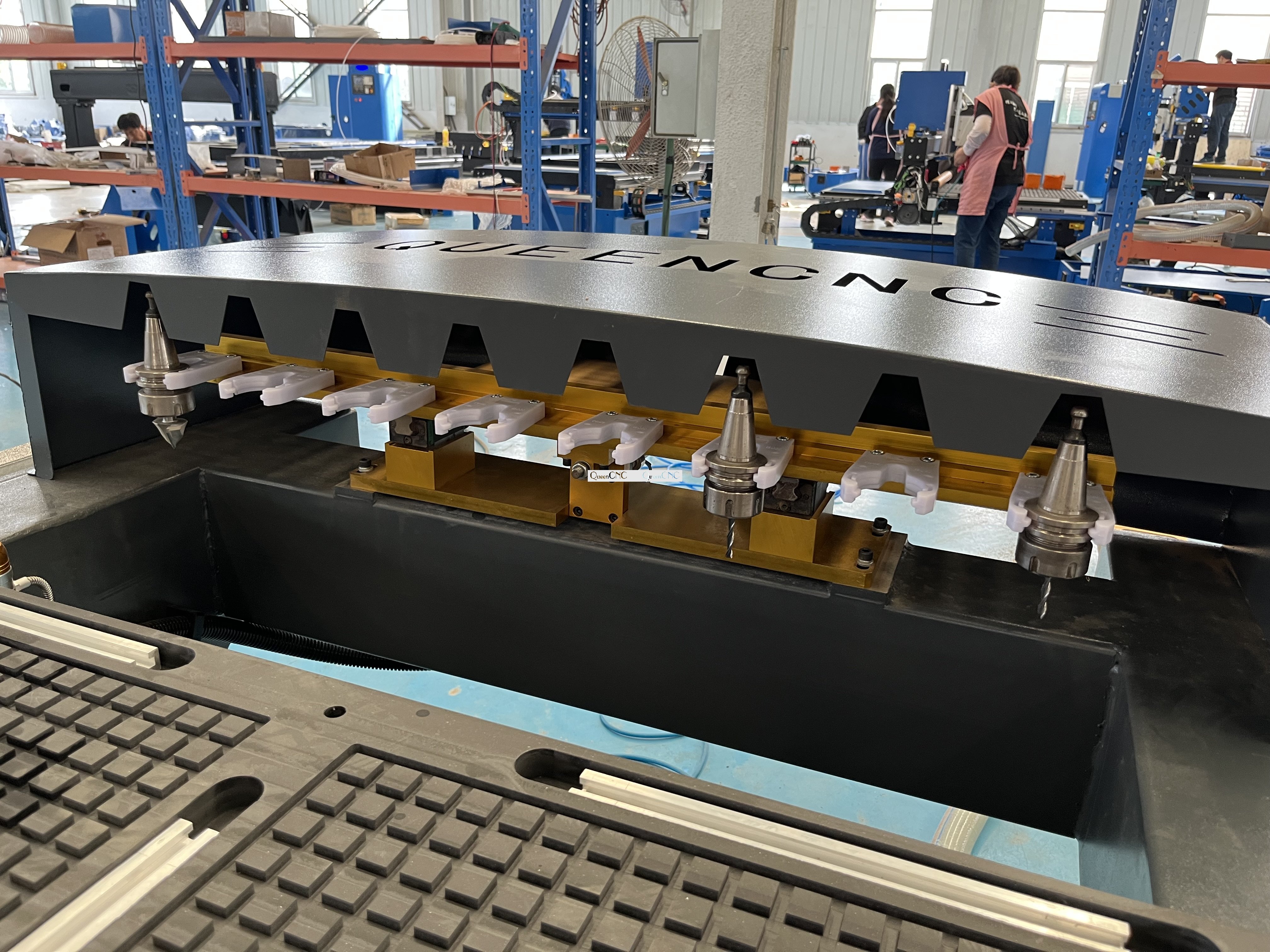
An ATC CNC router is equipped with an Automatic Tool Changer (ATC) system.
Unlike a standard CNC router, an ATC machine can automatically select and change tools during a machining program.
For example, a cabinet panel may require several different operations:
-
Panel cutting
-
Groove milling
-
Edge profiling
-
Decorative engraving
-
Other machining operations requiring different tools
With an ATC CNC router, the machine can switch between compatible tools according to the programmed machining sequence, reducing the need for manual tool changes.
Depending on the machine configuration, the tool magazine may be designed as a linear or disc-type system.
For furniture manufacturers handling multiple machining processes, an ATC CNC router can help simplify production workflows and reduce operator intervention.
3. Key Differences Between ATC and Standard CNC Routers
The main difference is not simply spindle power or machine size. It is how the machine handles different machining operations.
| Comparison | Standard CNC Router | ATC CNC Router |
|---|---|---|
| Tool changing | Manual | Automatic |
| Tool magazine | Usually not included | Included |
| Multiple tool operations | Requires manual intervention | Can be programmed |
| Production workflow | More operator involvement | More automated |
| Machine configuration | Generally simpler | More complex |
| Initial investment | Usually lower | Usually higher |
| Suitable applications | Basic cutting and engraving | Multi-process woodworking |
The actual production advantage depends on the machining program, tool configuration, material, and operator workflow.
An ATC machine is not automatically the best choice for every workshop. The right configuration depends on how frequently different tools are required.
4. Which CNC Router Is Better for Cabinet Production?
For cabinet manufacturers, the choice should be based on the actual production process.
When a Standard CNC Router Is Sufficient
A standard CNC router may be suitable when:
-
Most jobs use one cutting tool.
-
Production volume is relatively small.
-
The workshop mainly handles basic panel cutting and engraving.
-
Investment cost is a major consideration.
-
Operators are available to perform manual tool changes.
For small woodworking businesses and workshops starting CNC production, a standard machine can provide a practical entry point.
When an ATC CNC Router Is a Better Choice
An ATC CNC router is worth considering when:
-
Different tools are required within the same machining program.
-
The workshop handles frequent production changes.
-
Cabinet panels require cutting, milling, and other tool-dependent operations.
-
The business wants to reduce manual tool-changing tasks.
-
Production automation is part of its development plan.
For growing furniture factories, an ATC CNC router can provide a more flexible production solution.
5. Important Factors to Consider Before Buying an ATC CNC Router
Selecting an ATC machine involves more than choosing the number of tools in the magazine.
Buyers should consider the following factors.
Working Area
The working area should match the dimensions of the materials being processed.
For example, a 1325 CNC router is commonly selected for 4 × 8 ft panel processing, while larger working areas may be required for oversized furniture panels or specialized production.
Spindle Configuration
The spindle should be selected according to the materials, cutting tools, and machining requirements.
Consider spindle power, cooling method, tool holder type, and compatibility with the planned tooling system.
Tool Magazine Capacity
Different production processes require different numbers of tools.
A machine with more tool positions may offer greater flexibility, but buyers should select capacity according to their actual machining programs.
Control System and Software
Check whether the CNC control system supports the required machining functions and whether the software is compatible with your existing design and production workflow.
Before ordering, it is important to confirm file formats, post-processors, tool definitions, and communication requirements.
Vacuum Table and Workholding
For panel furniture production, a suitable vacuum table can help hold sheet materials during machining.
The vacuum system should be selected according to panel size, material characteristics, cutting conditions, and the required holding force.
6. Explore QUEEN CNC ATC CNC Router Solutions
QUEEN CNC provides CNC router solutions for woodworking and furniture manufacturing applications.
Our product range includes standard CNC routers, 1325 ATC CNC routers, 2030 ATC CNC routers, and nesting CNC machines.
For example, our 1325 ATC CNC router can be configured with a 9 kW ATC spindle, automatic tool changing, servo motor drive, and a vacuum table combined with T-slots.
For more demanding panel furniture applications, the 2030 ATC CNC router with a drilling unit provides additional machining capabilities.
Machine configuration can be selected according to working area, spindle requirements, tool magazine capacity, control system, and production needs.
Since 2012, QUEEN CNC has focused on CNC router manufacturing and international markets. We pay attention to machine assembly, inspection, and testing before shipment, while providing technical communication and after-sales support for customers.
We believe that choosing the right machine starts with understanding the customer's real production requirements.
Standard cnc router:
https://www.queencnclaser.com/CncRouter/Standard_1325_CNC_Router_Machine__4x8ft__for_Woodworking__am_138.html
ATC cnc router:
https://www.queencnclaser.com/CncRouter/Heavy_Duty_1325__4x8__3_Axis_CNC_Router_Machine_for_Woodwork_139.html
7. Final Thoughts: Which Machine Should You Choose?
There is no single CNC router configuration that is suitable for every woodworking business.
A standard CNC router can be a good solution for simple machining processes and workshops with limited investment budgets.
An ATC CNC router is more suitable for businesses that frequently use multiple tools and want a more automated production workflow.
Before making a decision, consider your material dimensions, machining operations, daily production volume, software requirements, and future expansion plans.
If you are unsure which configuration is right for your business, contact QUEEN CNC. Our team can help you evaluate your production requirements and recommend a suitable CNC router solution.
Frequently Asked Questions
1. What is the main difference between an ATC CNC router and a standard CNC router?
The main difference is the automatic tool-changing system. An ATC CNC router can change compatible tools automatically according to the machining program, while a standard CNC router generally requires manual tool changes.
2. Is an ATC CNC router suitable for small woodworking businesses?
Yes, it can be suitable if the business frequently performs multiple machining operations. However, the investment should be evaluated against actual production requirements.
3. Can an ATC CNC router cut MDF and plywood?
Yes. ATC CNC routers are commonly used for cutting and processing MDF, plywood, and other suitable woodworking materials. The correct tools and machining parameters should be selected for each material.
4. How many tools does an ATC CNC router need?
The required tool capacity depends on the machining process. Common configurations include 8, 10, or 12 tool positions, while other capacities may also be available.
5. Is an ATC CNC router faster than a standard CNC router?
An ATC machine can reduce the time spent on manual tool changes. However, actual production speed depends on cutting parameters, tool paths, material, machine configuration, and the overall workflow.
6. How do I choose the right CNC router for cabinet production?
Consider the panel size, machining operations, required tools, production volume, vacuum table, drilling requirements, control system, and software compatibility before selecting a machine.
 +86 15054192269
 sales@queen2012.com
 +86 15054192269
 +86 15054192269

