

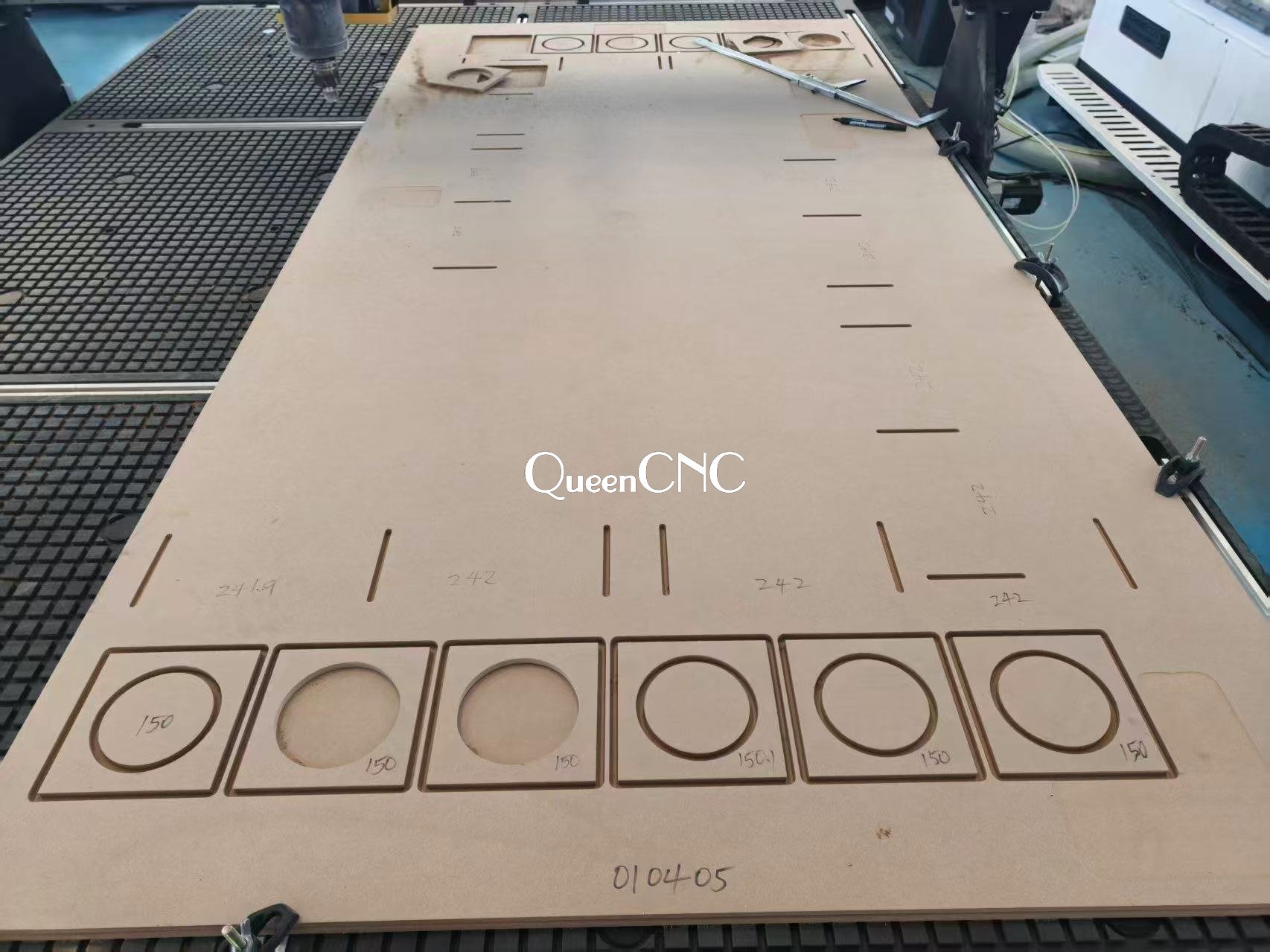
Building a high-quality CNC router is an exercise in rigidity, precision, and electrical integrity. To compete with industrial-grade machines, you must move beyond "hobbyist" components and focus on the mechanical physics of the machine.
Here is the blueprint for engineering a professional-level CNC router:
1. Structural Rigidity: The "Heavy Duty" Foundation
A machine is only as accurate as its frame. If the frame flexes under load, your precision is lost, no matter how good your motors are.
-
Base Frame: Use heavy-duty industrial steel tubing (at least 6mm–10mm wall thickness). After welding, the frame should ideally undergo stress-relieving (aging) to prevent warping over time.
-
Gantry Design: The gantry should be aircraft-grade aluminum or thick-walled steel. For wide machines, use a moving gantry with dual-drive motors to prevent "racking" (one side leading the other).
-
Milling the Mounting Surfaces: High-end machines have their rail mounting surfaces 5-side milled on a large CNC boring machine. This ensures the linear guides sit on a perfectly flat plane.
2. Motion System: Transmission & Guidance
Precision depends on how the rotational energy of the motor is converted into linear movement.
-
Linear Guides: Use square profile linear rails (e.g., Hiwin, THK, or PMI). Avoid round shafts, as they flex. 25mm or 30mm rails are standard for industrial wood and soft metal routing.
-
Transmission:
-
Z-Axis: Always use a Ball Screw (Grade C5 or better) for vertical precision and to prevent the spindle from "dropping."
-
X/Y-Axes: For long travels (over 1.5m), use Helical Rack and Pinion. Helical gears have more teeth in contact at once, providing smoother motion and higher weight capacity than straight racks.
-
-
Reducers: High-quality builds use Planetary Reducers (e.g., Shimpo or Neugart) between the motor and the rack to increase torque and resolution while minimizing backlash.
3. The "Heart": Spindle & Cooling
The spindle performs the work; its stability determines the surface finish.
-
Spindle Type: For professional work, choose an ATC (Automatic Tool Changer) spindle. It significantly increases efficiency by allowing the machine to switch from roughing to finishing bits automatically.
-
Bearing Configuration: Look for spindles with four ceramic bearings. Ceramic bearings handle heat better and run truer at high RPMs (18,000–24,000).
-
Cooling: Air-cooled spindles (Italian HSD style) are lower maintenance, while water-cooled spindles run quieter and are better for 24/7 production environments.
4. Electrical Control & Drive Systems
-
Motors: Move beyond open-loop steppers. Use Closed-Loop Steppers (which prevent lost steps) or, preferably, AC Leadshine or Yaskawa Servos. Servos provide constant torque and can "talk back" to the controller if an error occurs.
-
Shielding & Grounding: This is where most DIY builds fail. Use shielded IGUS-style cables for all signal wires. Ensure the machine is properly grounded to a single point to prevent EMI (electromagnetic interference) from the VFD (Variable Frequency Drive).
-
Controller: Use an industrial standalone system like NK105, Syntec, or LNC. These handle complex 3-axis or 5-axis toolpaths more reliably than PC-based software like Mach3.
6. The Assembly Standards (The "Invisible" Quality)
-
Squareness: Use a dial indicator and a precision square to ensure the X and Y axes are perpendicular to within 0.02mm.
-
Wire Management: Use high-quality drag chains (cable carriers) to ensure wires don't fatigue and break over thousands of cycles.
-
Leveling: Use heavy-duty leveling feet to ensure the frame is not twisted during installation.
-
-
 +86 15054192269
 sales@queen2012.com
 +86 15054192269
 +86 15054192269

