

CNC Beam Saw: An Efficient Panel Cutting Solution for Modern Furniture Manufacturing
In modern furniture manufacturing, cutting accuracy, production efficiency, and material utilization are essential factors affecting overall production costs. As demand for customized cabinets, wardrobes, office furniture, and panel-based furniture continues to grow, manufacturers need more efficient and reliable panel cutting solutions.
A CNC beam saw is designed to meet these requirements. By combining computer numerical control, automatic positioning, and optimized cutting programs, it helps furniture factories improve cutting consistency, reduce manual operations, and streamline their production processes.
For manufacturers looking to upgrade from traditional panel cutting equipment, investing in an automatic CNC beam saw can be an important step toward more efficient production.
1. What Is a CNC Beam Saw?
A CNC beam saw, also known as an automatic panel saw or computerized beam saw, is an industrial woodworking machine designed for precise cutting of large wood-based panels.
Unlike a traditional sliding table saw, which relies heavily on manual positioning and operation, a CNC beam saw uses a computer-controlled system to manage panel positioning and cutting sequences.
The main working process generally includes:
-
Loading large-format panels onto the machine.
-
Entering or importing cutting dimensions and production data.
-
Positioning panels through an automatic feeding and pushing system.
-
Clamping panels securely with a pressure beam.
-
Performing programmed cutting operations.
-
Unloading accurately cut panel components for further processing.
This automated process makes CNC beam saws particularly suitable for furniture manufacturers handling repeated cutting tasks and medium-to-large production volumes.
2. Main Advantages of a CNC Beam Saw
High Cutting Accuracy and Consistency
Cutting accuracy is critical in cabinet and panel furniture manufacturing. Incorrect dimensions can cause problems during edge banding, drilling, assembly, and installation.
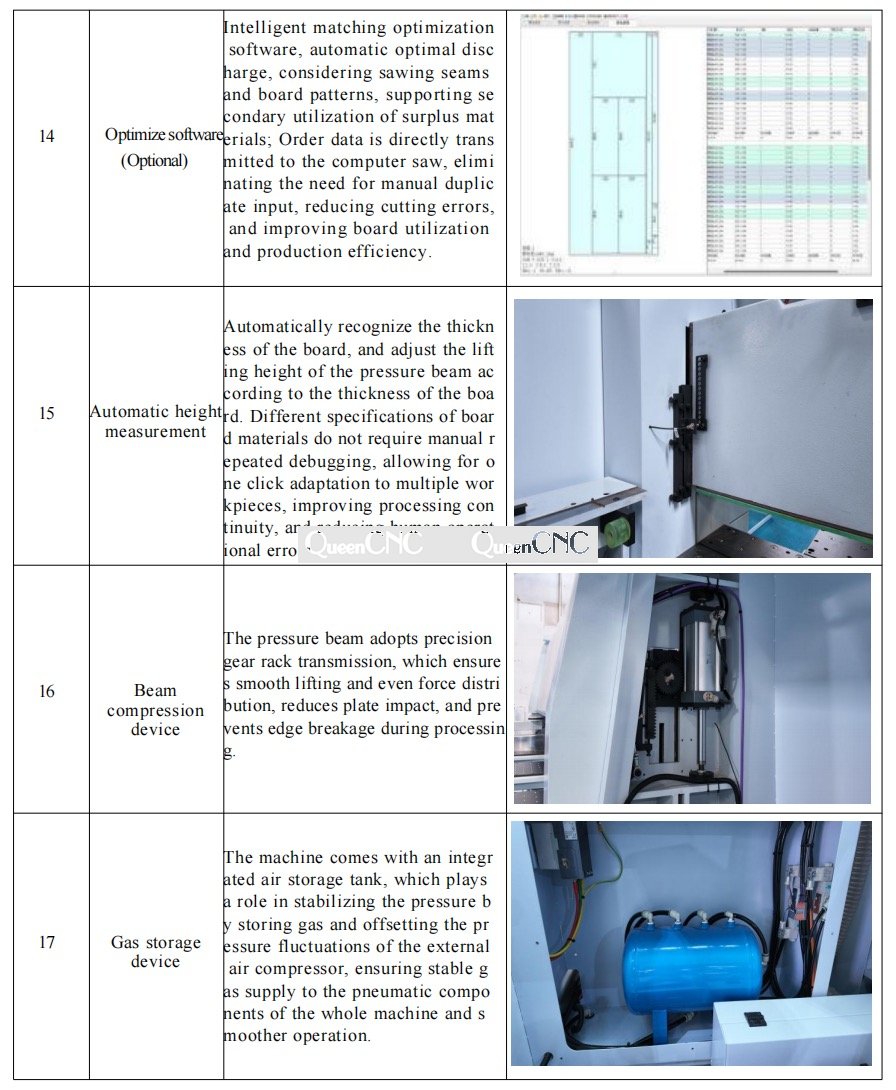
A CNC beam saw uses a controlled positioning system to achieve consistent cutting dimensions. The pressure beam holds panels securely during cutting, helping reduce unwanted movement and improve repeatability.
A scoring saw can also be used to help minimize chipping on laminated and melamine-faced boards when properly adjusted to the material and main saw blade.
Improved Production Efficiency
Manual panel cutting requires operators to repeatedly measure, position, and handle materials.
An automatic beam saw simplifies these operations through programmable cutting sequences and automatic positioning. Multiple panels can also be processed in a stack when the machine configuration and material requirements allow.
This helps reduce repetitive manual work and makes production planning more efficient.
Better Material Utilization
Material costs represent a significant part of furniture manufacturing expenses.
With cutting optimization software, manufacturers can arrange different panel dimensions into optimized cutting patterns before production. This helps reduce unnecessary offcuts and improve the utilization of raw materials.
For factories processing large quantities of MDF, plywood, particleboard, and melamine-faced panels, even small improvements in material utilization can contribute to meaningful cost savings.
Reduced Dependence on Manual Operation
A computerized control system simplifies the cutting process and reduces repetitive manual positioning.
Operators can manage cutting tasks through the control interface and follow programmed production instructions. This helps improve workflow consistency and makes production less dependent on individual operator experience.
3. Applications of CNC Beam Saw Machines
CNC beam saw machines are widely used in woodworking and panel furniture manufacturing.
Typical applications include:
Kitchen Cabinet Manufacturing
Cutting cabinet sides, shelves, doors, bottoms, and other rectangular components with consistent dimensions.
Wardrobe and Closet Production
Processing MDF, particleboard, and melamine-faced panels for wardrobes, storage cabinets, and customized furniture.
Office Furniture Manufacturing
Cutting panels for desks, office cabinets, workstations, and shelving systems.
Customized Panel Furniture
Processing different panel sizes according to digital cutting lists, helping manufacturers manage diverse orders more efficiently.
4. CNC Beam Saw vs. Traditional Sliding Table Saw
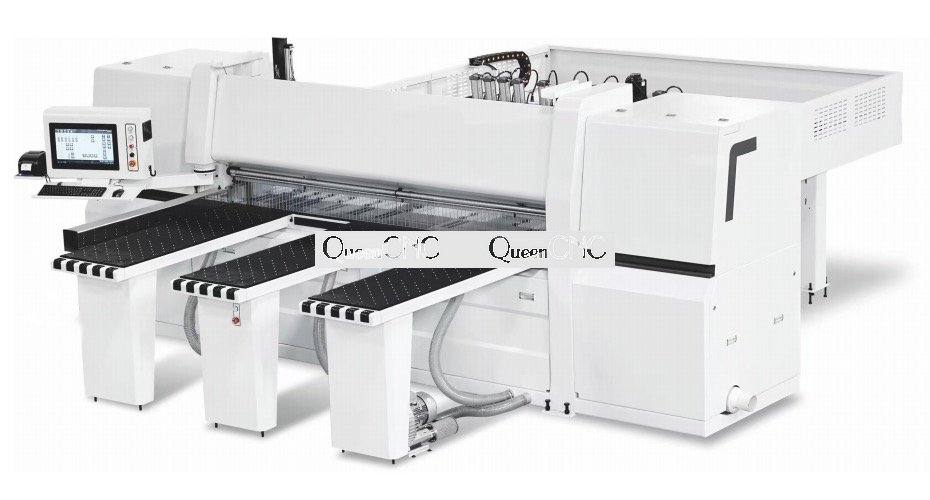
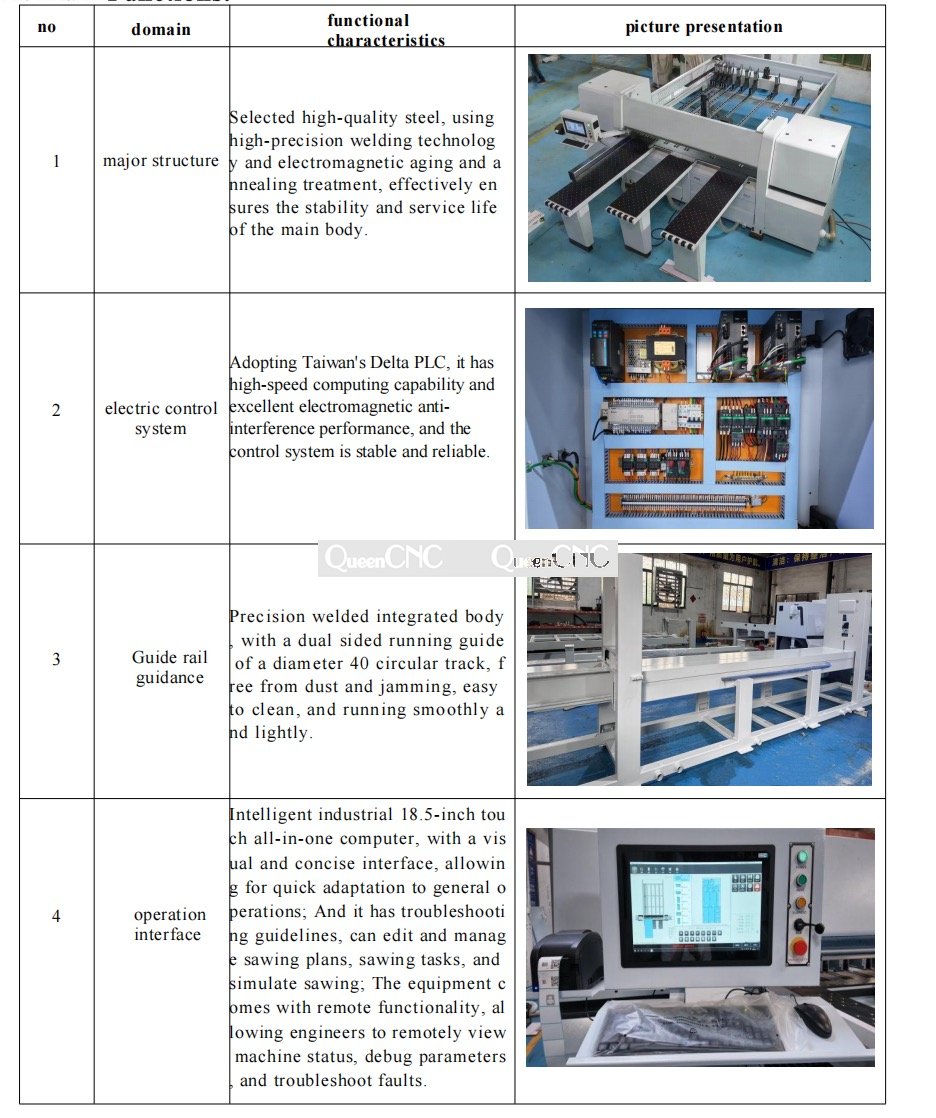
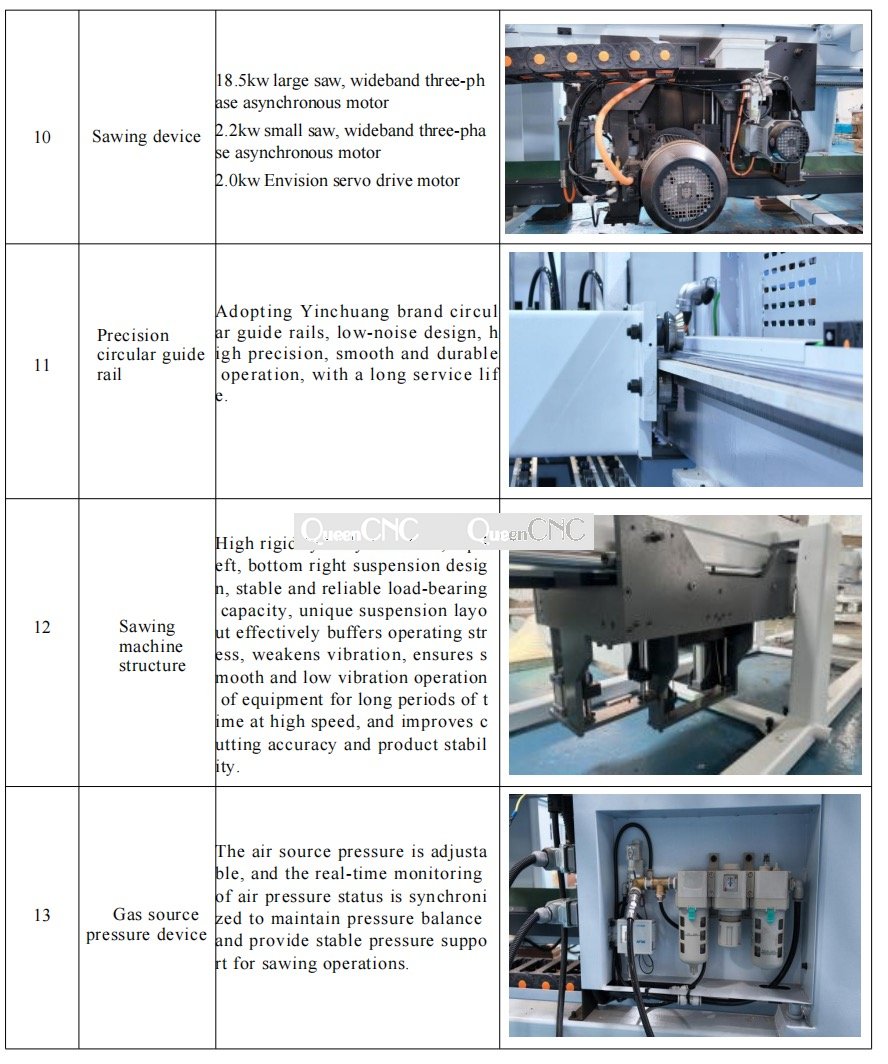
Both machines are used for woodworking panel cutting, but they serve different production requirements.
| Comparison | CNC Beam Saw | Sliding Table Saw |
|---|---|---|
| Operation | Computer-controlled | Mainly manual |
| Panel positioning | Automatic | Operator-controlled |
| Cutting workflow | Programmable | Manual setup |
| Batch processing | Suitable for production batches | Suitable for flexible small batches |
| Labor requirements | Reduced repetitive handling | More operator involvement |
| Best application | Medium and large-scale panel production | Small workshops and varied cutting jobs |
A sliding table saw remains a practical choice for smaller workshops and flexible woodworking operations.
However, for manufacturers processing large quantities of rectangular furniture panels, a CNC beam saw offers a more automated and consistent production solution.
5. What Should You Consider When Choosing a CNC Beam Saw?
Selecting the right CNC beam saw requires more than comparing machine prices. Manufacturers should evaluate the following factors.
1. Cutting Capacity
Check the maximum cutting length, panel thickness, and processing dimensions according to your actual production requirements.
2. Main Saw and Scoring Saw
The main saw performs the primary cutting operation, while the scoring saw helps improve the cutting edges of laminated and coated panels.
The blade specifications and adjustment system should match the materials being processed.
3. Servo Positioning System
A reliable positioning system is important for accurate panel feeding and consistent cutting dimensions.
4. Cutting Optimization Software
Check whether the software supports cutting list optimization, data import, production management, and barcode or label generation if required.
5. Electrical Configuration
Confirm the required voltage, phase, frequency, and total power consumption before ordering, especially for overseas installations.
6. Manufacturer's Quality Control and Technical Support
Machine assembly, mechanical alignment, electrical components, final inspection, and after-sales technical support all influence long-term operating performance.
A reliable manufacturer should be able to explain its inspection procedures and provide appropriate technical assistance.
6. Upgrade Your Furniture Production with QUEEN CNC
At QUEEN CNC, we focus on manufacturing woodworking machinery for professional furniture production.
We understand that a machine is not simply an equipment purchase. It is an important part of a manufacturer's daily production process.
From mechanical assembly and electrical installation to machine testing before shipment, we pay attention to manufacturing details and quality control.
Our goal is to provide practical woodworking solutions that help customers improve production efficiency and maintain consistent processing quality.
Whether you are upgrading an existing panel cutting workshop or planning a new furniture production line, choosing the right CNC beam saw configuration is an important decision.
Contact QUEEN CNC to discuss your panel dimensions, cutting requirements, production capacity, and machine configuration. Our team can help you evaluate a suitable solution for your factory.
Frequently Asked Questions (FAQ)
Q1: What materials can a CNC beam saw cut?
CNC beam saws are commonly used for MDF, particleboard, plywood, melamine-faced boards, and other suitable wood-based panels. Material thickness, blade selection, and machine configuration should be considered.
Q2: Can a CNC beam saw cut multiple panels at once?
Yes. Many industrial beam saws support stack cutting. The actual number of panels depends on the maximum cutting height, material characteristics, blade configuration, and machine capacity.
Q3: What is the difference between a CNC beam saw and an automatic panel saw?
In woodworking applications, these terms are often used interchangeably to describe computerized panel sizing equipment. However, machine structures and automation levels can differ between manufacturers and models.
Q4: Does a CNC beam saw need cutting optimization software?
Optimization software is highly useful for furniture factories processing different panel dimensions. It helps generate cutting patterns, manage cutting lists, and improve material utilization.
Q5: Is a CNC beam saw suitable for small furniture factories?
It depends on production volume, available floor space, labor costs, and future development plans. Smaller workshops with limited production may prefer a sliding table saw, while growing factories can benefit from CNC automation.
Q6: What information is needed to get a CNC beam saw quotation?
You should prepare the required cutting length, maximum panel thickness, materials, production capacity, electrical requirements, and any automation or software requirements. These details help the manufacturer recommend a suitable machine configuration.
 +86 15054192269
 sales@queen2012.com
 +86 15054192269
 +86 15054192269

