

Buying a CNC Router? 7 Common Problems Buyers Should Check Before Placing an Order
Buying a CNC router is an important investment for any woodworking business. Whether you manufacture kitchen cabinets, furniture panels, office furniture or custom wood products, the right machine can improve your production workflow and help your business handle more orders.
However, choosing a CNC router is not always easy.
When comparing different manufacturers, buyers often receive quotations with similar working areas, spindle power and machine configurations. Some machines are considerably cheaper than others, even though their specifications appear almost identical.
So, where are the differences?
In practice, the biggest risks are not always visible in a quotation or product brochure. Machine construction, component quality, assembly standards, software compatibility and after-sales support can all affect the long-term ownership experience.
Before placing an order, here are seven important problems every CNC router buyer should consider.
1. Similar Specifications but Different Machine Quality
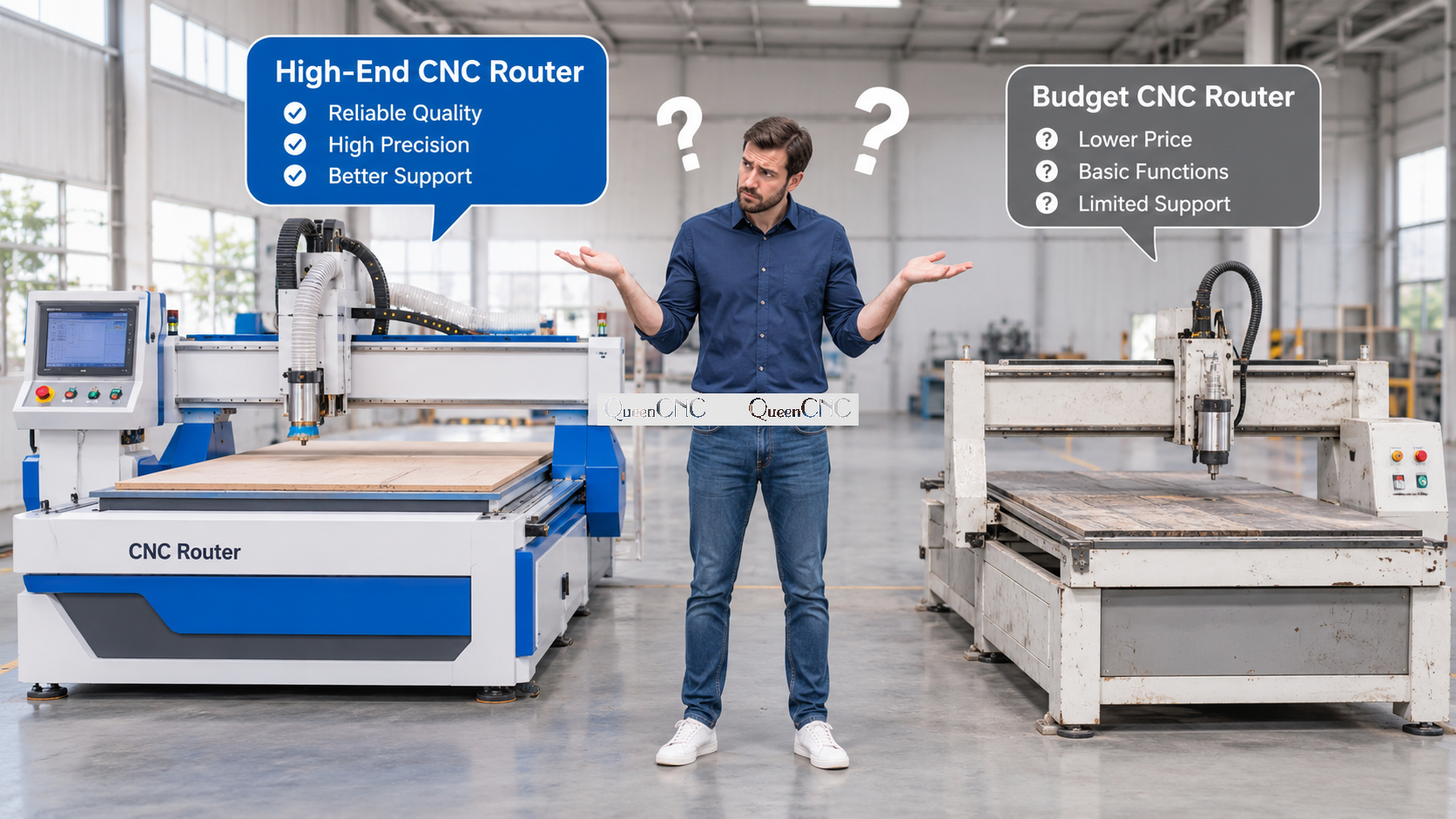
This is one of the most common challenges when comparing CNC router manufacturers.
Two machines may both advertise a 9kW spindle, servo motors, linear guide rails and an automatic tool changer. However, having similar specifications does not necessarily mean having the same machine quality.
The differences may come from:
-
The actual brand and model of electrical components
-
The quality and specifications of servo motors and drives
-
Linear guide rail and rack-and-pinion quality
-
Machine frame construction and welding
-
Spindle specifications and manufacturing quality
-
Assembly and installation standards
For example, two suppliers may both list servo motors in their quotations, but the motor brands, rated power and drive configurations may be different.
What should buyers do?
Do not compare quotations based only on component names or general specifications.
Ask suppliers to provide detailed brand names, model numbers and configuration lists. If possible, request photographs of the actual components and machine assembly.
A professional manufacturer should be able to explain what is installed on the machine rather than simply providing a list of generic specifications.
https://www.queencnclaser.com/CorporateNews/Why_CNC_Router_Quality_Differs_Despite_Using_the_Same_Compon_268.html
2. The Machine Looks Good During Testing but Cannot Maintain Production Quality
A CNC router may produce an acceptable sample during a short demonstration. But can it maintain consistent machining quality during daily production?
This is a more important question for furniture factories and cabinet manufacturers.
Common problems include:
-
Inconsistent dimensions between machined parts
-
Rough cutting edges
-
Misalignment during repeated operations
-
Excessive vibration during machining
-
Parts moving during cutting
-
Unexpected adjustments after long periods of operation
Machine accuracy is influenced by several factors, including frame rigidity, mechanical transmission, guide rail installation, gantry alignment and spindle condition.
A single accuracy figure cannot fully describe the machine's real production capability.
What should buyers do?
Ask the manufacturer how machine accuracy is inspected before shipment.
Useful inspection procedures may include:
-
Checking the alignment and squareness of the machine structure
-
Inspecting guide rail installation
-
Checking transmission system movement
-
Measuring positioning and repeatability
-
Running sample machining programs
-
Inspecting the finished workpiece
It is also helpful to request a machining video using materials similar to those used in your factory.
The important point is to evaluate both initial accuracy and the manufacturer's quality-control process.
https://www.queencnclaser.com/news/CNC_Router_Accuracy_Inspection__Geometric_Testing_During_Ass_264.html
3. The Machine Configuration Does Not Match Your Actual Production
Buying a machine with more functions does not automatically mean buying a more suitable machine.
For example, a furniture factory mainly producing standard cabinet panels may need an efficient nesting CNC router with automatic tool changing.
Another workshop specializing in decorative wood carving may have completely different requirements.
Common configuration mistakes include:
-
Choosing an unsuitable working area
-
Selecting insufficient spindle capacity for the intended operations
-
Purchasing an ATC system without considering the actual tool requirements
-
Ignoring the need for a drilling unit
-
Choosing an unsuitable vacuum table configuration
-
Overlooking dust collection requirements
For panel furniture production, a nesting CNC router may be equipped with an ATC spindle, drilling unit, vacuum table and automatic labeling system, depending on the production process.
However, not every factory needs every function.
What should buyers do?
Before requesting a quotation, prepare a clear description of your production requirements.
Consider:
-
What materials do you process?
-
What is the maximum panel size?
-
How many hours does the machine work each day?
-
How many different tools are used in one production cycle?
-
Do you need vertical drilling?
-
Do you require automatic loading, unloading or labeling?
A manufacturer should recommend a configuration based on these requirements rather than simply offering the most expensive machine.
4. Software and Controller Compatibility Is Overlooked
This problem is particularly important for businesses upgrading from manual woodworking equipment to CNC production.
A machine may have a suitable mechanical configuration, but if the software workflow is not compatible with the factory's existing production system, implementation can become difficult.
For example, cabinet manufacturers may already use design and production software to generate cutting files, drilling information, labels and machining instructions.
Before purchasing a nesting CNC router, buyers should check:
-
Which CNC controller is installed?
-
Which file formats can the machine process?
-
Is the machine compatible with the existing design software?
-
Does the machine support the required tool-changing commands?
-
Can drilling operations be programmed correctly?
-
Is software training or technical guidance available?
Do not assume that all CNC routers support the same software workflow.
Our recommendation: Ask the manufacturer to test a representative sample file from your existing production system before confirming the order.
This can help identify compatibility problems before the machine arrives at your factory.
5. The Initial Machine Price Does Not Include Everything You Need
A low quotation can look attractive, but buyers should always check what is included.
Sometimes, two quotations have different prices simply because their included accessories and configurations are not the same.
For example, one supplier may include two vacuum pumps and a dust collector, while another may quote the machine without these accessories.
Other items that need clarification include:
-
Vacuum pump quantity and power
-
Dust collection system
-
Automatic tool magazine
-
Drilling unit
-
Tool holders and collets
-
Electrical configuration
-
Software and licenses
-
Installation guidance
-
Shipping and packaging
For overseas buyers, freight, customs duties, taxes and local installation costs should also be considered.
What should buyers do?
Request a complete quotation with a detailed list of included and optional equipment.
Compare the total investment rather than only the machine's basic EXW price.
A transparent quotation makes it easier to understand the actual differences between suppliers and avoid unexpected expenses.
6. After-Sales Service Is Difficult to Evaluate Before Purchase
For international buyers, after-sales support is one of the most important considerations.
A CNC router is industrial production equipment. Even a properly manufactured machine requires regular maintenance, technical assistance and occasional replacement of wear parts.
The real question is not whether a machine will ever need maintenance, but whether the supplier can provide effective support when problems occur.
Common buyer concerns include:
-
Will the manufacturer respond when technical problems arise?
-
Can the supplier help diagnose electrical or mechanical faults remotely?
-
Are replacement parts available?
-
Can technicians provide installation guidance?
-
Will the manufacturer continue supporting the machine after several years?
Before ordering, ask the supplier about its technical support process, spare parts supply and documentation.
You should also clarify the warranty scope and terms in writing.
For distributors, this is especially important because the supplier's technical support also affects the distributor's reputation in the local market.
A reliable business relationship should continue after the machine has been delivered.
7. Choosing a Supplier Based Only on Price
The cheapest CNC router is not necessarily the most economical choice.
Consider two machines with different purchase prices.
If one machine has a better-matched configuration, more consistent assembly quality and accessible technical support, it may offer better long-term value even if its initial price is higher.
When calculating the real cost of ownership, consider:
-
Initial machine investment
-
Transportation and installation
-
Tooling and consumables
-
Routine maintenance
-
Replacement components
-
Operator training
-
Production downtime
-
Technical support
For a furniture factory, production interruptions can affect delivery schedules and customer relationships.
For a CNC machinery distributor, machine reliability and after-sales support can directly influence future sales and customer recommendations.
Instead of asking only, "Which supplier offers the lowest price?", ask:
"Which manufacturer can provide the machine configuration, production reliability and long-term support that my business needs?"
https://www.queencnclaser.com/news/How_Long_Does_a_CNC_Router_Machine_Last__10_Year_Customer_St_266.html
How Does QUEEN CNC Help Buyers Reduce These Risks?
QUEEN CNC has specialized in CNC router manufacturing since 2012, supplying woodworking machinery to customers in Europe, North America and Australia.
We understand that purchasing a CNC router is not simply about buying a machine. It is about choosing production equipment that needs to work reliably within a customer's business.
Our approach focuses on several important areas.
1. Detailed machine configurations
We communicate the machine's main components, configuration options and technical requirements to help customers understand what they are purchasing.
2. Factory assembly and inspection
Machine assembly and inspection are important parts of our manufacturing process. We pay attention to installation requirements, mechanical alignment and machine testing before shipment.
3. Application-based recommendations
Different factories have different production requirements. We discuss working areas, spindle configurations, tool-changing systems, drilling functions and other options according to the customer's intended applications.
4. International customer service
Our export experience helps us understand the communication and technical support requirements of overseas customers. We provide assistance with machine operation, technical questions and after-sales service.
We believe that a good CNC router manufacturer should not only offer competitive prices but also take responsibility for the machine's configuration, manufacturing quality and customer support.
Final Thoughts: Make a Smart Decision Before Investing
Choosing a CNC router requires more than comparing working areas, spindle power and prices.
Machine quality, machining consistency, configuration suitability, software compatibility, total investment and after-sales support all deserve careful consideration.
Before placing an order, ask questions, compare detailed specifications and request evidence of the manufacturer's assembly and inspection procedures.
A well-informed purchasing decision can help reduce unnecessary risks and provide a better foundation for your woodworking business.
Looking for a reliable CNC router manufacturer?
Contact QUEEN CNC to discuss your production requirements. We can help you evaluate suitable CNC router configurations for your woodworking factory or distribution business.
Frequently Asked Questions
1. Why do CNC routers with similar specifications have different prices?
Differences may come from component brands, mechanical specifications, machine frame construction, assembly standards, included accessories and after-sales support. Buyers should compare detailed configurations rather than general specifications.
2. How can I check the quality of a CNC router before buying?
Request detailed component lists, factory assembly photographs, inspection records and sample machining videos. If possible, arrange a factory visit or a live machine demonstration.
3. Is an ATC CNC router worth the investment?
An ATC CNC router can be valuable for businesses that frequently change tools during production. Whether it is worthwhile depends on production volume, machining processes, labor arrangements and the number of tools required.
4. What should be included in a CNC router quotation?
A quotation should clearly identify the machine configuration, spindle, control system, drive system, vacuum equipment, dust collector, optional functions, electrical requirements and applicable delivery and service terms.
5. Why is after-sales support important when buying from China?
Overseas buyers may not have direct access to the manufacturer's technicians. Responsive technical communication, clear documentation and spare parts support can help reduce troubleshooting time and production interruptions.
6. How do I choose the right CNC router manufacturer?
Look at manufacturing experience, actual machine configurations, factory inspection procedures, export experience, communication quality and long-term technical support. Do not make the decision based on price alone.
 +86 15054192269
 sales@queen2012.com
 +86 15054192269
 +86 15054192269

